


Muslims and Jews: A Shared Future
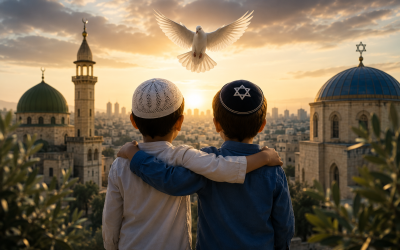
Every time a bullet is fired, it does not only take a life; it also destroys a part of humanity’s belief that people can live together. Every time a child is killed, a family is displaced, or a person is stripped of their dignity because of their religion or ethnicity, the world loses a piece of its conscience.
Our world has become increasingly consumed by narratives that divide humanity into “us” and “them,” as though a person’s worth is determined by their identity rather than their humanity. Yet one truth remains undeniable: blood has no religion, and the tears of grieving parents are the same, regardless of the language they speak or the prayers they recite.
Muslims and Jews are not destined to be eternal enemies. History, despite its conflicts, also contains countless examples of coexistence, cooperation, and shared achievement. They lived side by side, exchanged knowledge, advanced science, enriched culture, and contributed to flourishing civilizations. This legacy reminds us that hatred is not destiny—it is a choice, and it is one we can refuse.
Coexistence does not require denying political disagreements or historical narratives, nor does it demand that any people abandon their rights or identity. Rather, it begins with the recognition that human dignity is non-negotiable, and that the rights of civilians—especially children—must never become bargaining chips in political conflicts.
Protecting children must be the one red line that no society is willing to cross. There is no moral or legal justification for valuing one child’s life above another’s. No child should grow up learning the sounds of explosions before the sounds of music, or memorizing the names of weapons before the names of trees. Their future belongs in classrooms, playgrounds, and homes—not among the ruins of war.
Human rights lose their meaning when they are applied selectively. Justice cannot be credible if it protects some victims while ignoring others. Rejecting antisemitism is a moral obligation, just as rejecting hatred against Muslims, Arabs, or any other community is equally essential. Racism cannot be defeated with more racism, nor can peace be built on discrimination.
Political leaders, religious figures, educators, and the media all carry a responsibility that extends far beyond managing crises. They must help build a culture that sees diversity as a source of strength rather than fear. Words have the power to heal, but they also have the power to inflame conflict. History has repeatedly shown that violence often begins with language that strips others of their humanity.
The world does not need more slogans. It needs moral courage—the courage to reject hatred even when it is popular, to defend justice even when it is costly, and to recognize that every human being possesses equal dignity regardless of religion, ethnicity, or nationality.
A safer future will not be achieved through the triumph of one people over another. It will emerge through the triumph of justice, compassion, the rule of law, and mutual respect. When every person knows that their life and rights are equally protected, peace becomes more than a political agreement—it becomes a way of life.
The path toward a more stable Middle East and a more peaceful world begins with a simple but profound principle: human dignity is indivisible. Every child, regardless of identity, deserves to inherit a future free from hatred. Muslims and Jews, like all peoples, have the capacity to build that future together—one founded on coexistence, mutual respect, shared humanity, and the unwavering belief that every human life has equal value.